Last summer, a friend of ours was a delegate at a conference of Mathematicians in France. The conference venue, as organised by the University of Toulouse, was the little village of Nant, which happens to lie in the Département in which Roquefort Cheese is, officially, produced.
Like all the best food produce, Roquefort has a Season. It so happens that early spring milk forms the raw material for the best cheese. After it is fermented, spores from a mould found in local caves (and subsequently named after them) are added, then the cheese solidifies and is shaped into drums weighing a few pounds each. The best time to eat it, if you really like a cheese that fights back, comes about four months later.
Those four months are best spent (I mean by the cheese, not by the prospective diner) in the region's caves, after which the cheese is exported all over the world (except, for a very brief interlude, to the USA, where it was named as a weapon in a Trade War). The caves, after that point, are empty.
At least, they are empty of cheese. However, with four months having elapsed since "early spring" we are now into the beginning of the tourist season. And, by a delightful coincidence, of the conference season. So along come our Mathematics delegates, to sample the delights of Roquefort and see the caves in which it is born. So as to look the part, the caves are now graced with stacks of replica Roquefort drums. We're not talking packaging here, I mean models of what the actual cheese looks like.
And that, of course, begs a question to those of us who study, and comment upon, the wise use of Space in all its forms:
Unless the replica cheeses are inflatable or somehow collapsible, Where are they stored in the spring?
Wednesday, 5 January 2011

Monday, 13 December 2010
There's no getting away from it

Of course everyone's known about Space Junk for ages. There's probably even a band named after it. But what I only learned today was that there's now so much of it that satellites can't be just left to their own devices up there with nothing but Kepler's Laws for guidance. Typically each of the hundreds of useful vehicles has to take avoidance action on average a dozen times a year, with its makers knowing that anything larger than a flake of paint can knock it out. It's getting a bit like a hairy dash round the M60 on the edge of rush-hour with the added excitement of knowing that every other vehicle on the road is being steered by a blind, trigger-happy robot.
And that is why there are now disposal plans, designated "graveyard orbits" and even talk of "Active Debris Removal", with the development of some out-of-this-world recycling technology. Houston, meet Mr Straight.
Meanwhile, the Search for Extra-Terrestrial Intelligence goes on. Which begs the question, is there anybody else out there looking, and if so might they find us? If they do, will their reaction be a bit like that of a twentysomething lass, who's met this really fun-to-be-with bloke, but is rather put off him when she first sees the state of his flat?
Friday, 10 December 2010
Moral Hazard
 So I'm on my way through the short-cut to the shops, and there, sitting in splendour in the middle of the path, is a pile of muck (in the time it took me to go and get the camera, someone had obviously kicked it in exasperation).
It strikes me that this is a metaphor for our times.
The path of life is strewn with dogma.
Wednesday, 8 December 2010
"Our garage is full of junk"
I can't remember the last time I saw a garage that actualy had a car parked in it. We have a garage, and I'm pretty sure the car has never been parked there: I can also be reasonably certain that the people who sold us the house (and whose idea it had been to get the garage built in the first place) had never parked a car in it either.
This evening events sent me tiptoeing through the snow to get something from the garage. It was the banner made by our local Residents Against the Incinerator group (every town should have one). Because of the low temperatures (it got down to a record-breaking -12 degrees the night before last) and the snow, I hadn't been in the garage for a while. Isn't it funny how you kind of look at things afresh?
There are seven bikes in there, though there are only four of us. But they all get used: when people are staying with us, we can all go for a bike-ride together. All the gardening kit is hibernating there (we haven't got a shed), as is the camping stove and the barbecue. There are four boxes of dry wood for the stove, other wood-related kit, a sledgehammer, and even two sledges (the people across the road from us have gone one better and have two canoes on their garage roof). There's a roll of loft insulation, although we haven't got a loft. There are two massive candles. And if you get bored, there's a coconut shy. And probably some coconuts too, but they're very likely to be past their sell-by, so you'll have to slum it with four massive jars of jam instead.
What would happen if we didn't have the space for all this, or if, heaven help us, we were suddenly gripped by the urge to have a clear-out? Well, somebody else from our Party would have to look after the coconut shy for a start. The rest of it isn't exactly standard fare for your local charity shop. If we were patient we could try and give it away on Freecycle, but whoever heard of someone in the throes of a clear-out suddenly becoming patient?
Anyway it's all a bit academic. Each bit of stuff has its day: the barbecue in summer, the sledges in winter, the gardening kit in spring and autumn. If we were to get rid of any, we'd only have to waste a lot of time and money buying anew the following year.
And where would all the old stuff go? Probably on that incinerator, that nobody wants.
This evening events sent me tiptoeing through the snow to get something from the garage. It was the banner made by our local Residents Against the Incinerator group (every town should have one). Because of the low temperatures (it got down to a record-breaking -12 degrees the night before last) and the snow, I hadn't been in the garage for a while. Isn't it funny how you kind of look at things afresh?
There are seven bikes in there, though there are only four of us. But they all get used: when people are staying with us, we can all go for a bike-ride together. All the gardening kit is hibernating there (we haven't got a shed), as is the camping stove and the barbecue. There are four boxes of dry wood for the stove, other wood-related kit, a sledgehammer, and even two sledges (the people across the road from us have gone one better and have two canoes on their garage roof). There's a roll of loft insulation, although we haven't got a loft. There are two massive candles. And if you get bored, there's a coconut shy. And probably some coconuts too, but they're very likely to be past their sell-by, so you'll have to slum it with four massive jars of jam instead.
What would happen if we didn't have the space for all this, or if, heaven help us, we were suddenly gripped by the urge to have a clear-out? Well, somebody else from our Party would have to look after the coconut shy for a start. The rest of it isn't exactly standard fare for your local charity shop. If we were patient we could try and give it away on Freecycle, but whoever heard of someone in the throes of a clear-out suddenly becoming patient?
Anyway it's all a bit academic. Each bit of stuff has its day: the barbecue in summer, the sledges in winter, the gardening kit in spring and autumn. If we were to get rid of any, we'd only have to waste a lot of time and money buying anew the following year.
And where would all the old stuff go? Probably on that incinerator, that nobody wants.
Monday, 29 November 2010
Space below zero
 Here we see an ordinary, mundane, run-o'-the-mill British field, as seen all over the country, and as overlooked by all of us (except, perhaps, the good folk who earn their living from it)...transformed, at no cost to the taxpayer, into an exciting, free, and healthy place of family entertainment.
We even saw the field's owners, out with their family doing exactly the same: they didn't seem to mind at all that someone was borrowing the field next to their house without so much as a "By your leave".
Monday, 8 November 2010
Lightbulb Moment
 It struck me as being rather silly that, having splurged all our savings on the shiny new space-age roof, we were still stuck with 19th-century lighting in the kitchen. Yes I know, Halogen Downlighters are the weapon of choice for illuminating all those freshly-made-over homes in programmes like Changing Designs, Home DIY and Grand SOS, and they do look like miniature UFOs, but they are essentially little heating elements that happen to give off a bit of light as an aside, and use a technology that hasn't moved on a lot since that nice Mr Swan and his idea of a glowing filament in a vacuum.
The original bulbs in our kitchen had used 50 watts each, meaning each gave out about the same amount of heat as a person. There were 14 of them. Some people think it's ridiculously wasteful to burn nearly three quarters of a kilowatt just to light one room, while others think it's ridiculously nerdy to care. Hmm, guilty as charged.
So, shortly after we moved in, I replaced them all with 20 watt bulbs which were very nearly as bright. A green-minded friend pointed out that by doing this I had met a national target being talked about at the time, to reduce Carbon Dioxide emissions by 60% (the target has since become a more ambitious 80%, but I've yet to notice any practical difference). It also looked as if that this was as low as I could go without either taking the kitchen ceiling to bits to get at (and change) the transformers for those lights, or putting up with a very dim kitchen.
For the next three years there the new bulbs all sat, cheerfully putting 280 watts of heat into the space between the kitchen ceiling and the floor of the bedroom above. Until the arrival of the space-age roof, and the realisation that I really had had enough. I think it was hallowe'en that finally did it. Why had I never thought, until then, of gently pulling the entire fixture out of the ceiling and finding out what was lurking beyond, up there in the ceiling space? Come to that, why are there so many little dark spaces in a typical house, full of various busy connections which are so crucial to the smooth running of everyday life, and yet which remain so utterly unknown? There are cities in other continents with whose layout I am more familiar than the layout of the connections in our own house.
I turned off the mains, climbed on a chair and carefully pulled the chrome ring from the ceiling. It turned out that the only thing holding it in place was a pair of sprung "wings". And the only thing holding the connecting wire in place was, the chrome ring itself. Nothing else was fixed to anything, meaning that the entire connection (including that cursed transformer) could be eased out through the hole.
That was the difficult bit!
The easy bit is, buying fourteen cool versions of "GU10" bulbs and their connectors, getting out wirestrippers and a screwdriver, and getting on with it.
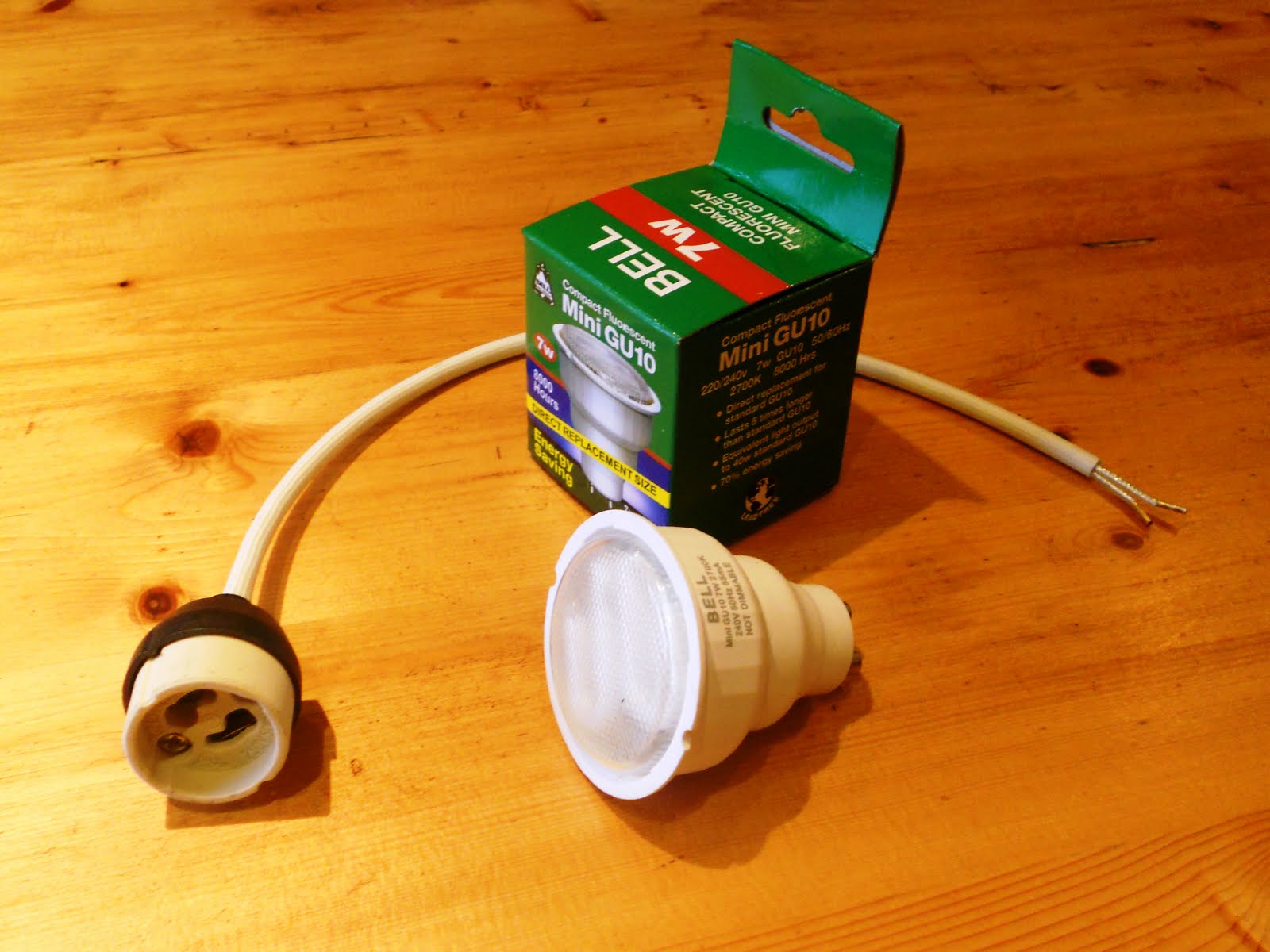 The amusing sequel includes being asked by various people, how did you do that?, and the possibility of a whole new volume of light-bulb jokes...
Tuesday, 12 October 2010
Winning the Game
D'oh the Game!!
The Game, Fille explained, has only one rule: you must never think about it. Once you think about it, you have lost. Then, wherever you are, and whoever you're with, you have to tell someone "I've just lost the Game".
But, I asked, then surely everyone who hears you will also have lost? Or what if you're alone and can't tell anyone? And, worst of all, can't people just cheat, by keeping quiet about having thought about the Game?
Apparently none of this is important. And the Game is played only by honest players. It's going round Fille's school like wildfire: so much so that a mention of the Black Hand Gang (alleged murderers of Archduke Ferdinand in Sarajevo, who turned up in a History lesson) caused some classmate who had misheard the name to exclaim "D'oh the Game!". The next History lesson included a presentation, and one further unfortunate classmate, on being asked to put up the next slide, was greeted with a screen completely blank except for the words THE GAME written in large friendly letters...it transpired that the History teacher, when still a student, had also played the Game.
I came up with the idea that anyone who (as was common at my old school) was a victim of being called a Swat, should get their own back by sitting in the front row of the class wearing an otherwise-ordinary school shirt decorated with the words "the Game" on the back. Badges with very small letters spelling out "You've just lost the Game" are also doing the rounds.
It all reminds me of that Oriental tale involving a cheeky magician who said he had an extremely powerful spell which he was willing to deploy on behalf of some rich patron, but which, he warned, would only work if the supplicant would not allow any thoughts of monkeys to cross his mind during the long incantation. I have tried this and can report, after exhaustive research, that it is impossible.
But the more you think about it, the worse it gets. There are many other things which work well until you start to think too hard about them. Any long-practiced and long-ago-mastered physical skill, for a start, falls into this group, because thinking about it brings it out from the back of the mind, which is more in touch with muscles and long-perfected skills, to the front, which is where new things are learned.
It seems that the only way of stopping this happening is to somehow perfect the ability to think, literaly, of Nothing, and defend that thought of Nothing from all possible comers.
The Game, Fille explained, has only one rule: you must never think about it. Once you think about it, you have lost. Then, wherever you are, and whoever you're with, you have to tell someone "I've just lost the Game".
But, I asked, then surely everyone who hears you will also have lost? Or what if you're alone and can't tell anyone? And, worst of all, can't people just cheat, by keeping quiet about having thought about the Game?
Apparently none of this is important. And the Game is played only by honest players. It's going round Fille's school like wildfire: so much so that a mention of the Black Hand Gang (alleged murderers of Archduke Ferdinand in Sarajevo, who turned up in a History lesson) caused some classmate who had misheard the name to exclaim "D'oh the Game!". The next History lesson included a presentation, and one further unfortunate classmate, on being asked to put up the next slide, was greeted with a screen completely blank except for the words THE GAME written in large friendly letters...it transpired that the History teacher, when still a student, had also played the Game.
I came up with the idea that anyone who (as was common at my old school) was a victim of being called a Swat, should get their own back by sitting in the front row of the class wearing an otherwise-ordinary school shirt decorated with the words "the Game" on the back. Badges with very small letters spelling out "You've just lost the Game" are also doing the rounds.
It all reminds me of that Oriental tale involving a cheeky magician who said he had an extremely powerful spell which he was willing to deploy on behalf of some rich patron, but which, he warned, would only work if the supplicant would not allow any thoughts of monkeys to cross his mind during the long incantation. I have tried this and can report, after exhaustive research, that it is impossible.
But the more you think about it, the worse it gets. There are many other things which work well until you start to think too hard about them. Any long-practiced and long-ago-mastered physical skill, for a start, falls into this group, because thinking about it brings it out from the back of the mind, which is more in touch with muscles and long-perfected skills, to the front, which is where new things are learned.
It seems that the only way of stopping this happening is to somehow perfect the ability to think, literaly, of Nothing, and defend that thought of Nothing from all possible comers.
Subscribe to:
Posts (Atom)